
Real roses, in the world, are more numerous than anyone first opening the catalogue of a breeder's nursery would assume. Thirty thousand cultivars is the lower estimate, and two to three hundred new names are added every year. Roses have their breeding houses — English, French, German, Dutch, Colombian — each with its own signature, philosophy, recognisable varieties known to florists everywhere. There are producer countries with radically different climates, giving roses of different character. There are classes and sub-classes built over a century and a half. And there is a gulf between the petrol-station one-euro rose and David Austin's Juliet, which the breeder worked on for fourteen years before releasing.
This article is about what separates a real rose from a standard one, who breeds it, where it is grown, which varieties are worth knowing by name, and what it takes to make a rose bouquet in Paris last seven to ten days in the vase instead of three.
What a rose is, biologically, and why there are so many
Genus Rosa, family Rosaceae — the same family as apple, pear, raspberry, plum. Roses and fruit trees are biological cousins. Nature counts about 150 wild rose species, all in the Northern Hemisphere — from the Arctic Rosa arctica to the subtropical Rosa chinensis. The oldest known fossil rose remains date to about 34 million years ago, the Florissant Formation in Colorado, late Eocene.
The cultural history of roses begins at least five thousand years before our era. Roses grew in the gardens of ancient China, Mesopotamia, Egypt, Greece. Homer mentions them in the Iliad. Herodotus describes roses in the gardens of King Midas. Byzantine and Arab gardens cultivated Rosa damascena for its essential oil. In medieval Europe, the rose was both a symbol of the Virgin and a symbol of secrecy (sub rosa — "under the rose," meaning confidential).
But the explosion of varietal diversity only begins in the nineteenth century. Before 1867, Europe knew Old Garden Roses — Gallica, Damascena, Alba, Centifolia, Moss, Bourbon. One flowering at the start of summer, and that was that. When Rosa chinensis was brought from China to Europe with its repeat-blooming ability, and the Lyon breeder Jean-Baptiste Guillot crossed it with a European tea rose in 1867 to give the variety La France — the Hybrid Tea class was born. From that point, roses flowered all summer, and breeding exploded.
Today, there are more than thirty thousand registered cultivars. David Austin Roses alone has released over two hundred varieties in fifty years, and that is one nursery among dozens of world leaders. Meilland has more than two thousand in its register. Kordes more than one thousand. And that is without counting all the commercial nurseries of Ecuador, Colombia and Kenya that have produced new cuts specifically for the cut-rose market over the past thirty years.
Knowing every variety is impossible. Knowing the main breeders' names and recognising their signature — already a lot.
The main rose classes
Hybrid Tea. Tall straight stem, one large head at the top, tight bud with a multi-layered structure. This is the standard commercial rose — Vendela, Mondial, Red Naomi, Freedom, Quicksand. The class was created in 1867 and has dominated cut floristry ever since.
Floribunda. Bushes with clusters of medium-sized blooms on one stem. Less common in cut flowers, more often a garden variety.
Grandiflora. Hybrid between Hybrid Tea and Floribunda — large blooms in clusters.
Spray roses, or roses branchues in French. Commercial category — several blooms on one long stem, medium to small size. Often very fragrant, often in antique palette. Marked BR. in wholesaler price lists (from branche). Mansfield Park, Bal Musette, La Parisienne, Furusato, Wedding Party, Birds Nest belong here. The best in the mid-price segment on the Paris market are the spray roses from the Bella Linda, Trendsetter and Mansfield collections.
English Roses / David Austin. Modern class, created by English breeder David Austin from the 1960s onward. The idea was to cross Old Garden Roses (with their multi-layered rosette form and strong fragrance) with modern Hybrid Teas (with their repeat-flowering and resistance). The result: roses that look like old garden roses — open cups, layered petals, powerful fragrance, soft antique palette. Juliet, Patience, Darcey Bussell, Tess of the d'Urbervilles, Constance Spry, Munstead Wood — all his. Premium category of the world market.
Garden roses Paris florists carry — broad category that includes Austin's English Roses and similar varieties from other breeders. Main feature: open form with multi-layered rosette, rather than the tight commercial bud. Mansfield Park, Quicksand, White O'Hara, Pink O'Hara, Westminster belong here.
Old Garden Roses — Gallica, Damascena, Alba, Centifolia, Bourbon. Everything bred before 1867. Rarely used as cut flowers (single flowering, short stem); they live in historic gardens. The Roseraie de l'Haÿ near Paris keeps a collection of thousands.
Climbing, Miniature, Shrub, Species — separate categories, mostly garden, rarely make it into cut floristry.
The main breeding houses in the world
David Austin Roses, United Kingdom. Founded by David Austin Sr in 1969 in Shropshire, continued by his son. Full name: David Austin Roses Limited, headquartered in Albrighton, England. Varieties Juliet, Patience, Constance, Darcey Bussell, Tess, Keira, Edith. Juliet is one of the most famous and most expensive commercial roses in the world — Austin worked on it for fourteen years, debuted at the Chelsea Flower Show in 2006. Its wedding photogenicity put it on the covers of magazines worldwide.
Meilland International, France. Nursery in Antibes, founded in the 1850s by the Meilland family. Best-known variety — Peace (French Madame A. Meilland), bred by Francis Meilland between 1939 and 1945, a symbol of the end of the Second World War. Modern releases include Pierre de Ronsard (Eden Rose), Yves Piaget, Polka, Catherine Deneuve. Meilland is the largest French nursery by volume and an authority in world breeding.
W. Kordes' Söhne, Germany. Founded in 1887 in Elmshorn, now in Sparrieshoop. Four generations. Known varieties: Iceberg (Schneewittchen, 1958), Westerland, Aspirin Rose, Kosmos. Kordes specialises in disease resistance — their roses are considered among the most health-resistant in Europe.
Rosen Tantau, Germany. Founded in 1906. The Piano series is well known — deep red, dense central rosettes, velvet petal texture. Also Mariatheresia, Schöne Maid, Augusta Luise. A world market leader in cut roses; many of their varieties are grown in Ecuador and Kenya.
Delbard, France. Founded by Georges Delbard in 1935, headquartered in Malicorne-sur-Sarthe. Famous Peintres series — Henri Matisse, Camille Pissarro, Paul Gauguin, Claude Monet — roses with marbled bicolour patterns imitating brushstrokes. Also Lola Montez and Souvenir de Marcel Proust (one of the most fragrant modern roses).
Guillot, France. Founded in 1829 in Lyon. The Guillot family, father and son, created La France in 1867 — the first Hybrid Tea, and the start of the modern rose. The Generosa series, since 1995, produces contemporary French roses in the garden-rose spirit.
Alexandra Farms, Colombia. Young by world breeding standards, founded in 2003 outside Bogotá. They partner with David Austin Roses to grow the English varieties for the commercial cut market. Also their own collections — Wedding Garden, Sweet, Vintage. It is they who brought White O'Hara, Pink O'Hara, Piano, Westminster and White Cloud into the commercial trade — the open, lush roses you cannot find with mass-market suppliers.
VIP Roses, Netherlands. Family nursery of the Sassen brothers in Nieuwveen, 3.5 hectares of greenhouses. Main reputation: artistically tinted roses, with colours impossible through natural breeding — deep blacks (not burgundies, actually black), bright neons, metallics, bicolour gradients. Since 2021 they have run their own breeding programme. Their signature Villa line includes Villa Multibelle, Villa Lila, Villa Cerise, Villa Variola, Villa Muze. They also grow many varieties I work with regularly: Mansfield Park, Victorian Wedding, Notting Hill, Westminster Abbey, Quicksand, Darlington, Café Latte, Sweet Menta. At Rungis their roses are accessible through Paris wholesalers — one of the categories that radically separates a small artisan studio from mass-market services.
Schreurs, Interplant Roses, De Ruiter — the principal Dutch breeders, mostly Hybrid Tea and spray roses for the FloraHolland market.
The main producer countries
Kenya. The largest exporter of cut roses to Europe. Main region: Lake Naivasha at 1880 m altitude, equatorial climate, cool nights, constant temperature year-round.
Ethiopia. Second exporter to Europe, growing fast over the past decade. Highland region, similar climate to Kenya.
Ecuador. Premium exporter. Main plantations at 2500–3000 metres in the Andes. Ecuadorian rose: long firm stem (often 70–90 cm), large head, saturated colour, perfect standardisation. Signature varieties — Free Spirit, Quicksand, Mother of Pearls, Mondial, Mamma Mia.
Colombia. Highland savanna region around Bogotá. Specialises in garden roses — open, multi-layered varieties. Alexandra Farms is the main player. The majority of David Austin Roses on the commercial market (Juliet, Patience, Tess) is grown here under licence.
Netherlands. Historic hub of European rose breeding. Dutch domestic production has declined (Africa is cheaper), but FloraHolland in Aalsmeer remains the main world auction for cut roses.
France. Historic home of rose breeding. Main producing regions: Var in the south, Anjou, Loire valley. Active nurseries include Meilland (Provence), Delbard, Guillot.
Are roses really year-round? The season myth
Modern industry gives roses all year. Ecuador, Kenya, Colombia, Ethiopia work twelve months. In terms of availability, the cut rose has no season. In terms of quality, the season does exist and matters.
May–June: peak for French and English garden roses. David Austin in England, Meilland, Delbard, Guillot in France flower in open ground in these months, and garden cuts give the most fragrant, most colour-complex examples of the year. Scented roses Paris florists most want — they come out of these weeks.
Late June – August: peak for Ecuadorian grand-tête with long stems. In equatorial summer heat, heads are larger, petals firmer, colour more saturated. Quicksand, Mother of Pearls, Mondial are especially good then.
January–February: peak of premium imports timed for Valentine's. Roses for Valentine's Paris arrive at their best during this three-month window.
March–April: lead-up to Mother's Day. Producers release especially long, high-quality varieties for May.
What "French rose" means and why it is less hardy
The term is fuzzy. Technically a "French rose" can mean a variety bred by a French breeder (Meilland, Delbard, Guillot — and grown anywhere, in Ecuador or Kenya), a rose grown in France (rare, premium segment), or a rose in the spirit of old French gardens with an open form — Old Garden or English-style.
But behind the word there is a real philosophical and technical difference.
The French breeding school for a century and a half has bet on fragrance, form, colour depth. Meilland, Delbard, Guillot breed roses that are beautiful and that smell — sometimes so strongly the bud is sensed across the room. English and Dutch industrial breeding over the past seventy years has gone the other way: shelf life, stem strength, resistance to bacterial blockage, standardisation for long logistics. A Dutch rose survives the box, the plane, the storage, the shelf and a week in the vase. A French rose fades in three days — but those three days, it lives the way the Dutch never will: with fragrance that fills the room, petals that move under the eye, colour with depth.
This is not a flaw. It is a compromise French breeders chose: beauty and fragrance over endurance. At a good florist's, both are on hand. Endurance for an event or a long-distance gift — Ecuadorian or Kenyan. A bouquet that fills the room with fragrance and lives loud for three days — Meilland Yves Piaget, Delbard Souvenir de Marcel Proust, or the old Pierre de Ronsard.
The main competitions
Concours International de Roses Nouvelles de Bagatelle, Paris. Founded in 1907 by Jean-Claude-Nicolas Forestier, then conservator of parks for the city of Paris. The first session presented 148 new varieties from 27 French and 31 international breeders. The oldest rose competition in the world. Breeders submit candidate varieties two years before the contest, they are grown in the test beds of the park, and an international jury judges on flower beauty, fragrance, disease resistance, length of flowering, overall bush aesthetic. Winners receive a Bagatelle certificate which immediately raises the variety's market value.
Concours International de la Rose Nouvelle de Lyon, founded in 1931. Second in prestige. Lyon is the historic capital of French rose growing (Guillot, Pernet-Ducher).
Other important competitions: Roeulx (Belgium), The Hague, Madrid, Genoa, Glasgow, Baden-Baden, Monza.
The varieties I love and use
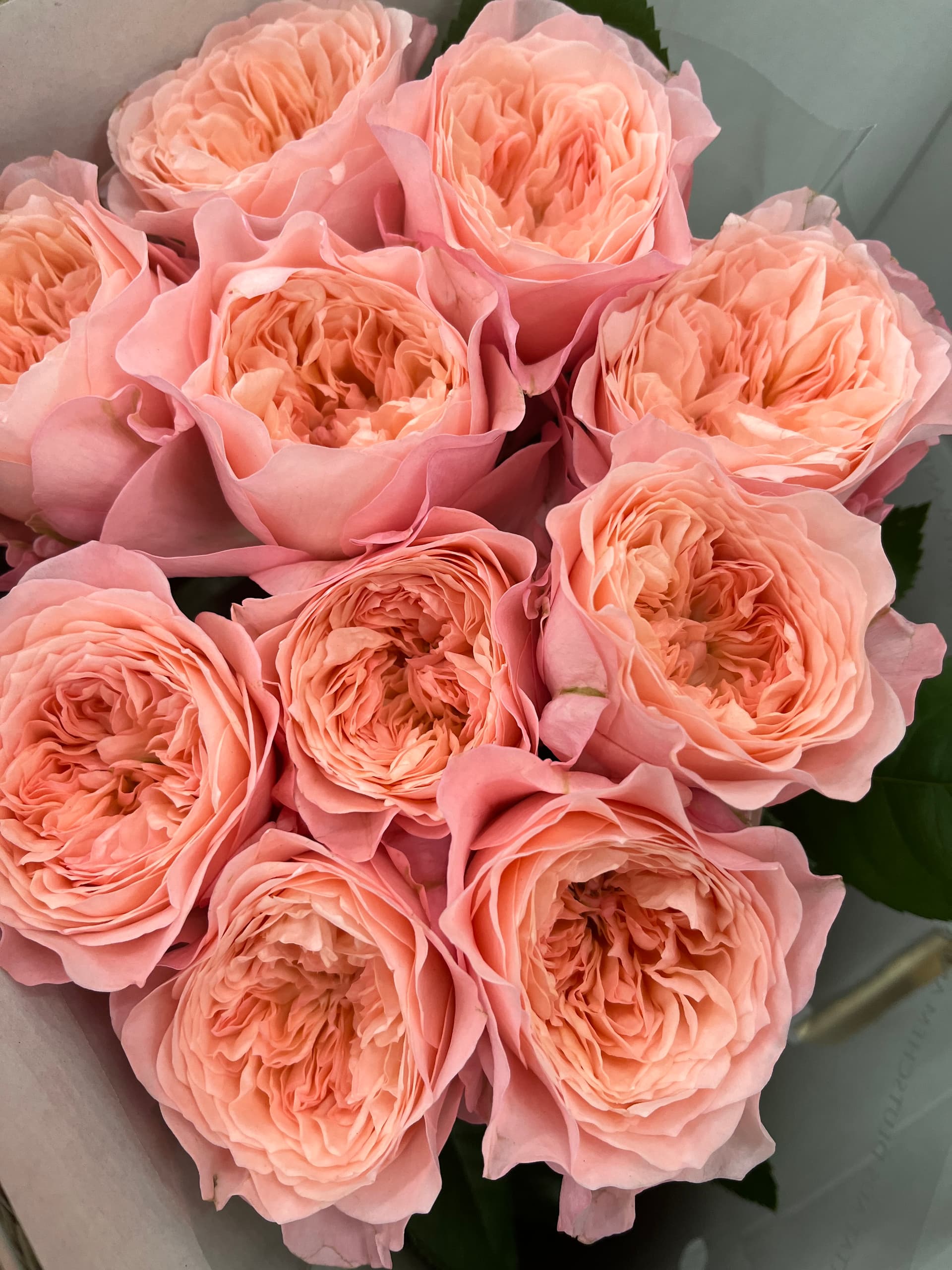
David Austin Juliet. One of the most iconic contemporary roses. Warm apricot-peach colour, dense multi-layered rosette, powerful peach-rose fragrance. Launched in 2006 at Chelsea, became the world's leading wedding rose by the late 2000s.
Other David Austin roses Paris customers regularly ask for: Princess Aiko, Westminster, Wedding Spirit, Patience, Tess of the d'Urbervilles, Darcey Bussell, Constance Spry. Westminster is almost extra-terrestrial, petals dense enough that the bud reads as porcelain.
Mansfield Park and Mansfield Park Pink. Spray series with an English garden mood. Several blooms per stem, antique pink or cream palette.
Misty Bubbles. Spray rose in a smoky lavender shade found in no other commercial cut variety.
Quicksand. Antique beige rose from Ecuadorian production. Colour between coffee with milk, cashmere, and desert sand.
White O'Hara and Pink O'Hara — series from the Dutch breeder Schreurs, grown in Colombia by Alexandra Farms. Open cupped form, dense rosette of petals, strong old-rose fragrance. White O'Hara is one of the best-known white garden roses in the world.
Vendela. One of the oldest still-current Hybrid Tea cream cultivars. Dutch breeding, ideal for weddings.
Piano. Tantau series — deep red, dense central rosette, velvet petal texture. Not the classic Valentine's red, but a noble red with architectural form.
Darcey Bussell and Tess of the d'Urbervilles. Both David Austin, both deep red with different structures.
Baronesse. Rare, deep wine, velvet, with an antique note.
Black Baccara. The darkest mass-market rose available. Velvety, dramatic.
Rose colours
Colour is the most subjective category in floristry. Victorian symbolism (red — passion, white — purity, yellow — friendship) is context, not rule. What matters more: the colour of a rose is an emotional temperature, and it reads without words.
White roses Paris — the most universal category. From cold snow to warm cream. Patience, Purity, White O'Hara, White Verena Classic, Mondial, Vendela in the lighter stage. For gestures that don't shout.
Sand, cream, antique. Café Latte, Sahara Sensation, Caramel Antike, Quicksand. The most Parisian palette — in the spirit of old interiors, beige walls, nude fabrics.
Yellow and gold. Golden Mustard, Edith, Beatrice from David Austin. Less common in bouquets — modern urban audiences are restrained about yellow. With deep burgundy or green, it works strongly.
Peach and apricot. Juliet, Princess Aiko, Tip-Top, Tie-Dye, Vicky Gardens. The warm-wow category.
Orange. Sunset, Free Spirit. A colour few know how to use well.
Red roses in Paris — the most culturally loaded category and the one that requires the most care in composition. From burgundy to scarlet. Tess, Darcey, Wanted, Piano, Red Naomi, Nina, Black Baccara. Red roses Paris delivery is our most frequent single-colour request.
Dark pink and magenta. Baronesse, Yves Piaget, Hettie, Capability.Mid-pink. Miranda, Constance, Romantic Antike, Mariatheresia, Pink Mondial. The classical rose-pink that everyone associates with the word rose.
Light pink. Pink O'Hara, Keira, Mayra's Bridal Pink, Princess Aiko in lighter stage. The wedding category by default.
Lavender roses Paris — the rarest palette in roses. A lavender rose bouquet usually means Lavender Bouquet and Misty Bubbles. Purple roses Paris demand also covers Yves Piaget and the antique-tinged stages of certain cultivars. In natural breeding, lavender does not exist in roses; these varieties are bred specifically for the colour. A bouquet with lavender roses always pulls the eye because the colour is unexpected for a rose.
Novelties and atypicals. Bicolour, marbled, tinted. Tie-Dye, Princess Midori (green), Brigitte Bardot with its paint-sugar effect, the Delbard Peintres series (Henri Matisse, Camille Pissarro), tinted lines from VIP Roses. Roses people don't immediately recognise as roses.
How many roses in a bouquet
12 roses — the classic dozen, the universal "rose bouquet to give.
25 roses — for an occasion that is felt: an anniversary, a marked date.
50 roses — a serious gesture. Anniversary with a round number, key moment.
75 roses — the upper limit of the intimate format.
100 to 500 roses — large format, scenography. For weddings, proposals, events, statement gifts. Not a bouquet in the ordinary sense — a composition.
Roses in full form — our signature
Some of the roses in our bouquets are made in the technique mettre la rose en pleine forme — each rose is taken to its fully opened garden form by hand, before it reaches you. The tight commercial bud becomes an open cup with a multi-layered rosette, like a garden rose or David Austin's Juliet — without Juliet's price.
On the site, several bouquets are already composed in this style — instead of the usual closed standard buds, you see roses in full form, close in look to peonies or to old garden roses. Vase life is not shortened: five to seven days with good care. The beauty simply arrives at once, on the first day, when the bouquet is at the peak of the emotional moment — not on the fourth day, when you have already looked away.
The effect, when you give someone a bouquet like this, cannot be described in words. It has to be seen. The recipient does not immediately understand these are roses. Then they do. Then they look for another minute in silence. That is the whole point.
How to make a rose bouquet last
The classic problem of cut roses is bent neck, or courbure de tête in French: the stem just below the bud is not firm enough to carry the weight of the opening flower, and the rose nods. Not a care fault — a hydraulic imbalance: water does not reach the heavy head fast enough, and the stem softens. Often seen on Patience, Juliet and other roses with a large cup and slim stem.
Cut at a 45-degree angle, 2 to 5 cm from the base, with a sharp knife or secateurs. Not scissors — a crushed stem does not drink.
Strip every leaf below the waterline. They rot first and contaminate the water.
On thorns: the professional advice from Chrysal is to leave them if possible. Removing thorns damages the stem and makes it more vulnerable to bacteria.
Clean, cool, fresh water — changed every two days, with a fresh cut each time. If you have a rose food (Chrysal Clear Rose, Floralife) add it according to the instructions. Without it, the rose lives less.Not in the sun, not near a radiator, not in a draught, not near fruit (ethylene speeds ageing). A cool room, diffused light.
Ordering a rose bouquet in Paris
I work with roses year-round — English David Austin, Ecuadorian Garden O'Hara and Quicksand, Dutch and Colombian varieties for different briefs. A mono David Austin bouquet (Juliet, Patience, Tess) — from €90–100 for ten to twelve stems. Multi-coloured bouquets with spray roses Mansfield Park, Misty Bubbles, Bal Musette — from €70.
A rose bouquet for anniversary in Paris, weddings, Saint-Valentin, just-because — built to order, around your colour, your format. Bouquets of 12, 25, 50, 100 roses in Paris made on request. As a rose florist Paris-based, I work directly with Rungis suppliers, so the stems leave the market the same morning as the delivery.
Rose delivery Paris — every day except Sunday. Bouquet of roses Paris customers receive is built on the morning of delivery, after the market, brought straight to your door. Free delivery from €100.